For a private landowner, a forested property is more than just a stand of trees; it’s a significant asset, a potential legacy, and a major responsibility. The question of what to do with this land—how to best utilize its value—is one of the most critical decisions you will ever make. It’s a choice that sits at the intersection of financial goals, personal values, and long-term vision.
The path you take will fundamentally alter the landscape, your financial portfolio, and the ecological future of the property.
Broadly, this decision often boils down to two distinct paths:
- Land Clearing for Development: The complete removal of forest cover to make way for a new land use, such as residential or commercial real estate, agriculture, or infrastructure. This is a path of transformation, treating the land as a “blank slate” for a new purpose.
- Sustainable Harvesting (Forest Management): A long-term, cyclical strategy of managing and selectively harvesting timber. This path treats the forest as a renewable resource, managed for continuous health, productivity, and revenue.
This is not a simple choice, and the “right” answer is different for every landowner and every property. This guide will provide a practical, in-depth comparison of these two approaches. We will explore the processes, goals, financial implications, and hidden considerations of each, empowering you to make an informed decision that aligns with your vision for your land.
What is Land Clearing for Development?
Land clearing is the first and most definitive step in converting a forested property to a new, non-forest use. It is far more comprehensive than simply cutting trees. It is a heavy-duty civil works project designed to prepare a site for construction or cultivation, leaving it fundamentally and, in most cases, permanently changed.
Common Goals for Land Clearing
Landowners pursue clearing for a variety of reasons, all of which involve a total change in land use:
- Residential or Commercial Development: This is a common driver. Clearing is necessary to build single-family homes, subdivisions, apartment complexes, or commercial retail spaces.
- Agricultural Conversion: Converting forested land into productive farmland, either for crops or as pasture for livestock.
- Infrastructure Projects: Creating corridors for essential services, such as public roads, access roads, utility right-of-ways (power lines, pipelines), or other public works.
- Site Improvements: This can include “view clearing” to improve the value of a home, creating recreational areas like fields or ponds, or managing invasive species and severe fire risks.
The Process: A Step-by-Step Overview
A professional land clearing project is a multi-stage operation that requires meticulous planning, heavy machinery, and a deep understanding of environmental regulations.
- Planning and Assessment: Before any machinery arrives, a thorough plan is required. This involves land surveys, marking property boundaries, and identifying sensitive areas. Most importantly, this stage involves navigating the complex world of permits. Depending on your jurisdiction and the project’s scale, you may need development permits, environmental assessments, and watercourse-use approvals.
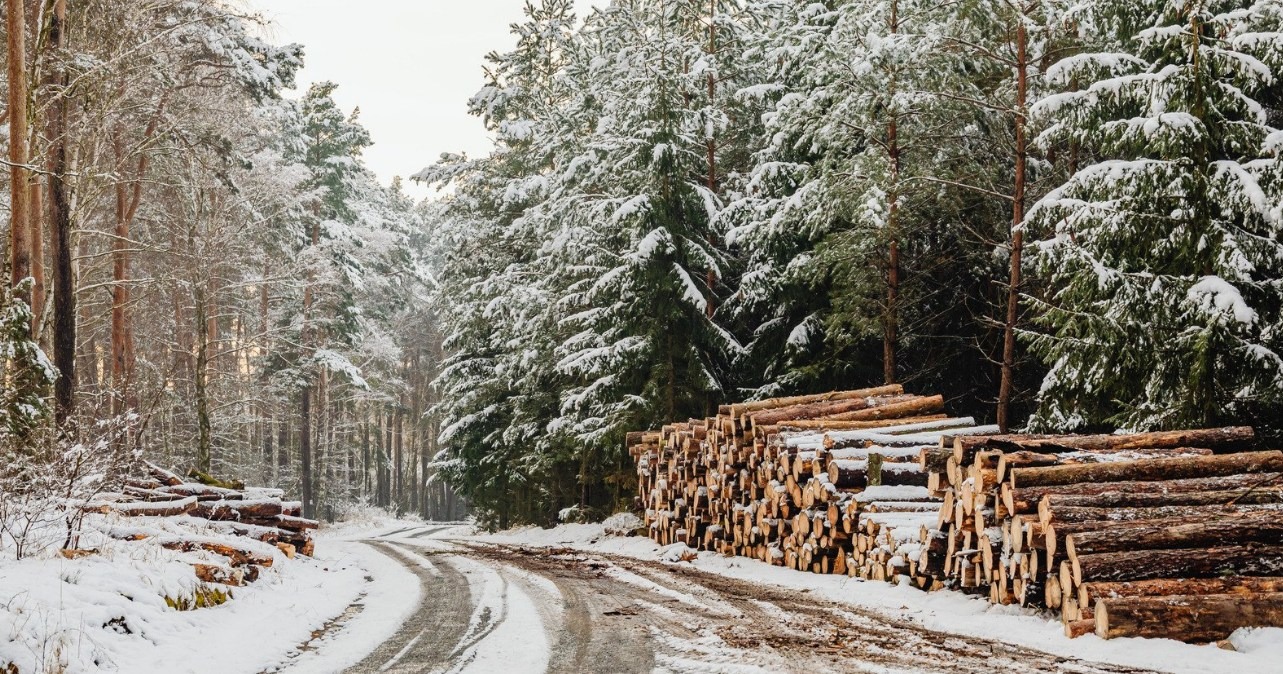
- Timber Harvesting and Merchanting: The first “on-the-ground” step is to assess and remove any merchantable timber. This is a critical step that many landowners overlook. Instead of viewing the trees as a “waste product” to be burned or chipped, a professional assessment can determine their market value. High-value species can be logged, processed, and sold, creating a significant revenue stream that can help offset (or even exceed) the cost of the clearing project.
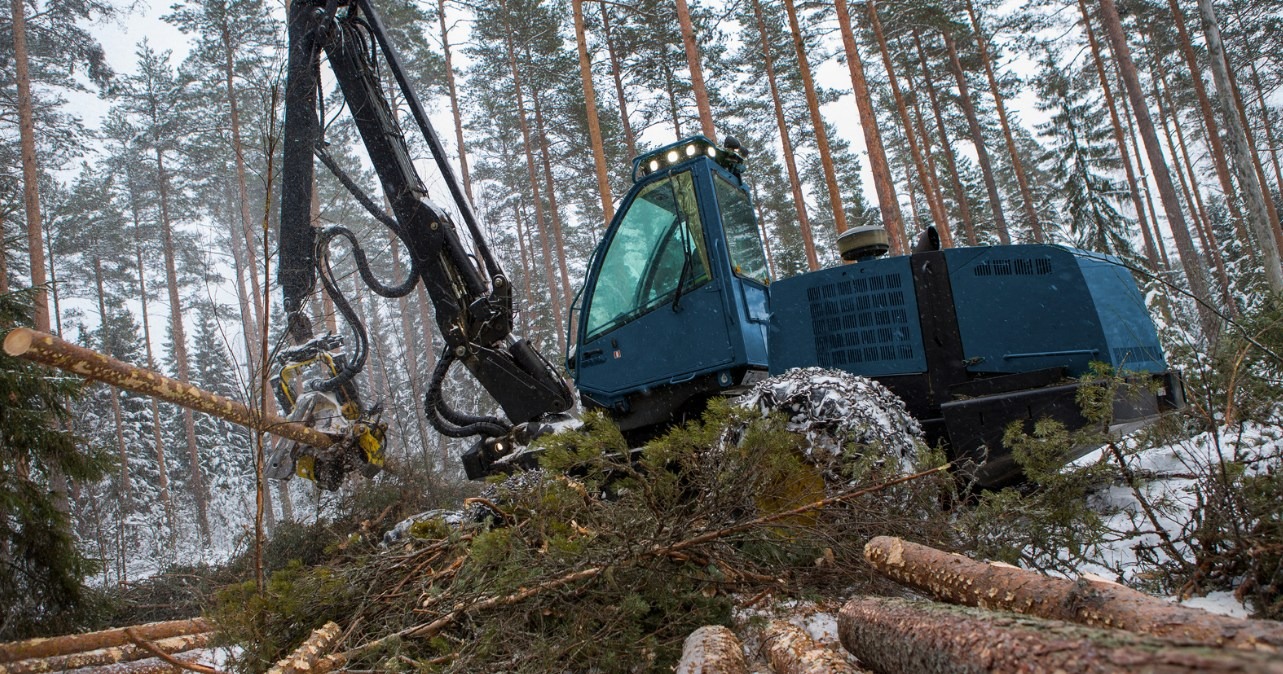
- Felling and Removal: After the valuable timber is gone, the remaining non-merchantable trees, brush, and undergrowth are cut down. This is typically done with feller bunchers and skidders.
- Stumping and Grubbing: This is what separates land clearing from simple logging. Stumps are pulled from the ground using excavators or bulldozers. “Grubbing” refers to the removal of the extensive root systems, rocks, and other debris from the topsoil.
- Waste Management and Disposal: This stage presents a major logistical challenge. You are left with massive piles of stumps, roots, and brush. Modern, responsible contractors will avoid “trench burning” (which is often illegal or heavily regulated) and instead opt for on-site grinding. Large-scale grinders can process the wood waste into chips, mulch, or biomass fuel, which can be sold or used on-site, turning a liability into an asset.
- Site Preparation and Grading: Finally, the land is graded. This involves levelling the site, contouring it for proper drainage, building up pads for foundations, or preparing the topsoil for agriculture.
Pros and Cons of Land Clearing
This path is definitive and comes with a clear set of benefits and drawbacks.
- Pro: Potential for High, Immediate Financial Return. In high-demand areas, converting land to a “higher and better use,” like real estate, can result in a significant, lump-sum financial gain that often exceeds the value of the timber.
- Pro: A Complete “Blank Slate.” You are free to execute your vision without any constraints from the existing forest.
- Con: Significant Ecological Impact. This is a major consequence. The forest habitat, with its biodiversity and ecological functions (like water filtration and carbon sequestration), is removed. This can lead to soil erosion and habitat loss for local wildlife.
- Con: High Upfront Cost and Complexity. Land clearing is a capital-intensive project. The costs for heavy equipment, labour, and waste disposal are significant. The regulatory and permitting process can be long, expensive, and uncertain.
- Con: One-Time Revenue. The financial gain from the land sale is a one-time event. Once the land is sold or developed, the revenue stream from that asset is finished.
What is Sustainable Harvesting & Forest Management?
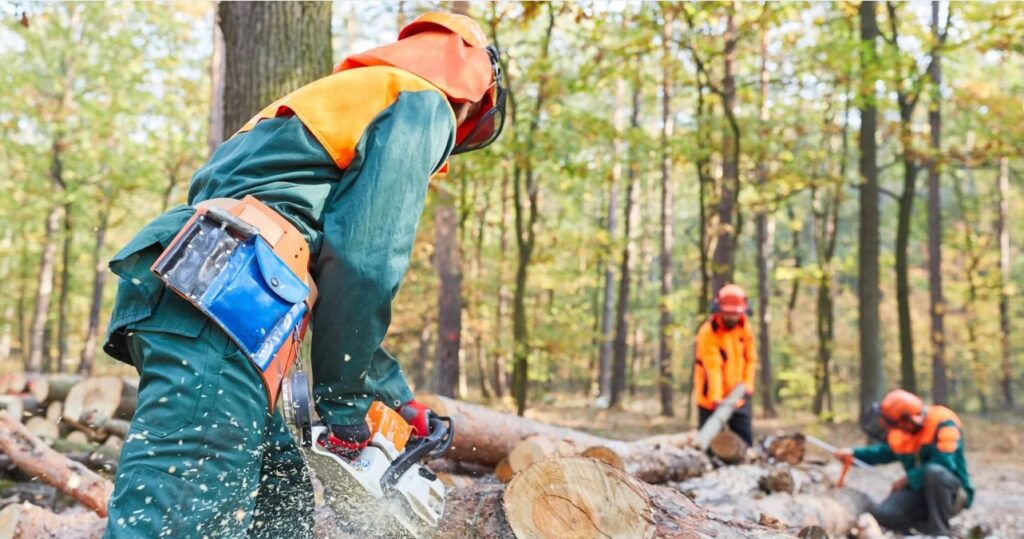
Sustainable harvesting, also known as sustainable forest management, is a completely different philosophy. It is not an event; it’s a process. It treats the forest as a dynamic, living system. The goal is not to eliminate the forest but to work with it, harvesting its “interest” (mature trees) while protecting its “principal” (the soil, water, and young trees).
The Philosophy: Working With the Forest
This approach is guided by a long-term vision. A professional forester will develop a comprehensive Forest Management Plan (FMP) for your property. This plan is a scientific “business plan” for your forest, outlining:
- An inventory of your trees (species, age, size, health).
- A map of sensitive areas (streams, wetlands, wildlife habitat).
- Your specific long-term goals (revenue, recreation, wildlife).
- A detailed, long-term harvesting schedule (what to cut, when to cut, and how to cut) to achieve those goals without degrading the forest.
The primary goal is to ensure the forest remains healthy and productive for generations.
Common Sustainable Harvesting Methods
“Logging” is not a one-size-fits-all term. A sustainable approach uses specific silvicultural systems tailored to the forest type.
- Selective Harvesting (or “Selection Cutting”): This is what most people picture. Individual trees or small groups of trees are selected for harvest based on their age, size, or health. This opens small gaps in the canopy, allowing sunlight to reach the forest floor and stimulate the growth of young, shade-tolerant seedlings. It’s a low-impact method that maintains a diverse, multi-aged forest.
- Shelterwood Cutting: This method is a phased removal. In the first phase, some of the mature trees are harvested, leaving the remaining trees to provide shade and a seed source for the next generation. Once the new seedlings are well-established, the “shelter” trees are removed in a second harvest.
- Patch Cutting (or “Group Selection”): This involves small, controlled clear-cuts, typically no more than a few acres in size. This method is designed to mimic natural disturbances (like a pocket of windthrow or root rot) and is ideal for regenerating species that need full sunlight, like Douglas-fir. The forest remains a mosaic of stands at different ages.
Pros and Cons of Sustainable Harvesting
This long-term path offers a unique set of benefits and requires a specific mindset.
- Pro: Recurring, Long-Term Revenue Stream. Instead of a single payday, you get periodic income. Depending on your forest, you might have a harvest every 10, 15, or 20 years, indefinitely.
- Pro: Preserves Ecological Integrity. The land remains a forest. You maintain wildlife habitat, protect soil quality, ensure clean water, and continue to sequester carbon.
- Pro: Maintains Recreational and Aesthetic Value. Your land remains a beautiful, wild place for you and your family to enjoy for hiking, hunting, and quiet recreation.
- Pro: Improves Forest Health. A managed forest is often healthier than one left unmanaged. Harvesting can remove diseased trees, thin overcrowded stands to make them more fire- and drought-resilient, and promote the growth of more valuable species.
- Pro: Potential Tax Advantages. Many jurisdictions offer significant property tax benefits for landowners who have a registered Forest Management Plan, as they are providing a public good.
- Con: Lower Immediate Financial Return. A selective harvest will not generate the same immediate cash as selling the land to a developer. The value is realized over decades, not a single quarter.
- Con: Requires a Long-Term Commitment. This is a multi-generational plan. It requires patience and a vision that extends beyond your own lifetime.
- Con: Requires Professional Expertise. To do this correctly and profitably, you need professional guidance. A poorly executed “high-grade” harvest (just taking the best and leaving the rest) can damage a forest’s future value.
Asking the Right Questions: How to Choose Your Path
There is no universal “right” answer. The best decision depends on a clear-eyed assessment of your personal, financial, and practical realities. Before you call a contractor, sit down and answer these five critical questions.
1. What are your true long-term financial goals?
This is the most important question. Be honest with yourself.
- Do you need a large, immediate lump sum of cash? If you are looking to fund your retirement, pay off significant debt, or finance a new, large-scale venture, the one-time payout from development might be the only path that meets that need.
- Are you looking for a long-term, “living” investment? If you want an asset that produces a steady, reliable, and inflation-proof income stream to supplement your finances for decades to come, sustainable harvesting is a strong contender. It’s the classic “don’t sell the farm, sell the crops” analogy.
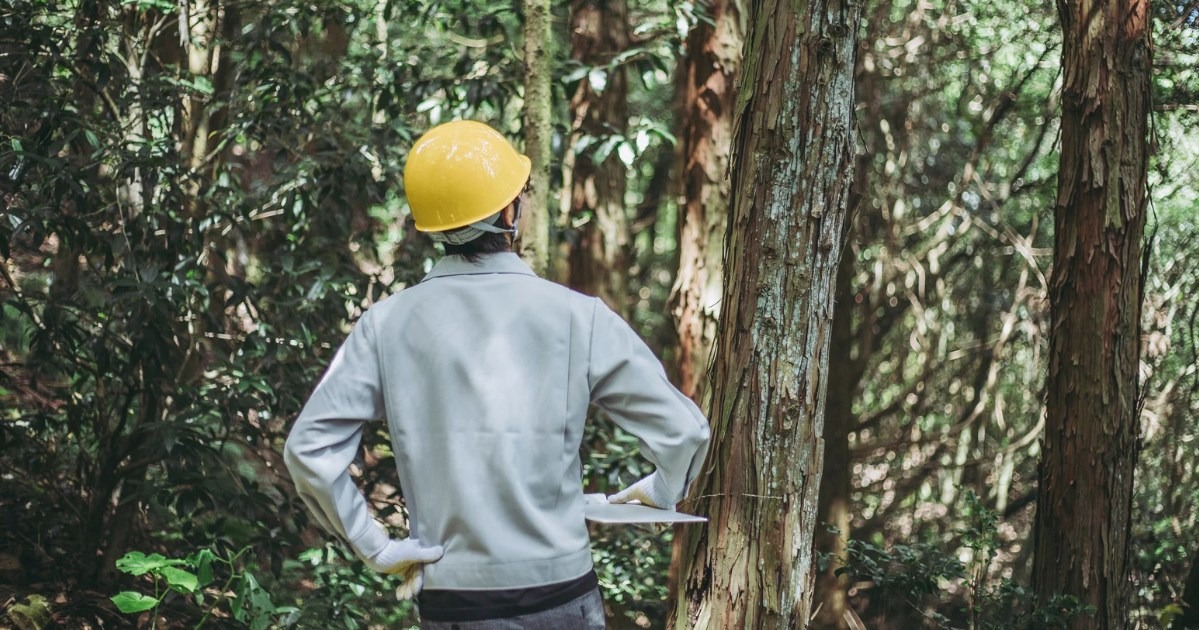
- Do you want to maximize the value of every part of your land? Even in a development scenario, it’s crucial to think like a forester. Don’t let a developer or excavator simply burn or bury your timber. A professional timber evaluation (also called a “timber cruise”) can reveal tens or even hundreds of thousands of dollars in hidden value that can be captured before the site work begins.
2. What is your personal timeline?
Your age and your plans for the next few decades will heavily influence your decision.
- Development: This path is “short-term intense.” It involves 1-5 years of high-stress, high-cost activity: permitting, hearings, engineering, and construction. But after that, it’s finished. You sell the property and move on.
- Harvesting: This path is “long-term passive.” It requires an initial investment in a management plan, followed by decades of patience. Your active involvement might only be a few months every 10 or 20 years during a harvest cycle, but the commitment to the plan is permanent.
Are you looking to build a legacy for your children and grandchildren to inherit? A well-managed forest is a gift that truly keeps on giving.
3. What are your non-financial values and legacy?
What do you want your land to be? A property’s value isn’t just measured in dollars. For many landowners, the non-financial value is paramount.
- How important are conservation, wildlife, and biodiversity to you?
- Do you value the land as a private recreational retreat for hunting, fishing, or hiking?
- What is the “aesthetic” value of the forest? Is the quiet and privacy it provides a core part of your life?
- When you think of your legacy, do you picture your name on a new subdivision, or do you picture your family walking through a healthy, mature forest that you stewarded?
If you choose development, these non-financial values are, by and large, forfeited. If you choose harvesting, they are preserved and even enhanced.
4. What do local regulations and zoning allow?
This is the practical barrier that can stop a plan in its tracks. Your personal desire may be irrelevant if the law forbids it.
- Zoning Restrictions: Your property is zoned for a specific use (e.g., Agricultural, Rural Residential, Conservation, or part of a resource-specific zone). You cannot simply decide to build a 200-home subdivision on land zoned for forestry. The rezoning process can be an expensive, multi-year, and highly uncertain battle with no guarantee of success.
- Environmental Regulations: Modern land-use laws are strict. You will face development-free buffer zones (setbacks) around streams, rivers, and wetlands. There may be protections for endangered species or sensitive ecosystems on your property. These regulations can severely limit the “developable” area of your land, making the project less profitable or even unviable.
- Permitting: Forestry operations also require permits, but they are typically simpler to obtain because forestry is often a designated, “as-of-right” use in rural areas. Development permits, in contrast, are far more complex and subject to public hearings and discretionary approval.
5. What are the unique characteristics of your property?
Not all land is created equal. The land itself will often tell you its best use.
- Location and Market: Is your land adjacent to a rapidly growing city? If it’s in a “hot” development corridor, the real estate value may be so high that it dwarfs the timber value, pushing you toward development.
- Site and Soil: Is the land stable, flat, and well-drained? This makes it a prime candidate for development. Or is it steep-slope, rocky, or composed of sensitive soils and wetlands? This type of “tough ground” is often far better suited for forestry, as development would be prohibitively expensive and ecologically damaging.
- Forest Composition: What is actually growing on your land? A stand of high-value, mature timber (like Douglas-fir, Cedar, or hardwoods) is a strong indicator for harvesting. A forest that is young, unhealthy, or composed of low-value species might not have the same financial appeal, which could tip the scales back toward development.
The “Third Option”: A Hybrid Strategy
The choice is not always a stark “either/or.” For many landowners with larger properties, the best solution is often a hybrid approach that strategically blends both paths.
This strategy allows you to unlock immediate capital while preserving your long-term legacy.
- Phased and Zoned Development: You could designate one portion of your property for development—for example, clearing 10 acres closest to the main road to sell as lots or build a family home. The remaining 90 acres can be placed in a sustainable forest management plan, providing long-term revenue and preserving the recreational and ecological character of your property.
- “Clearing with a Conscience”: Even if you choose full development, you can execute the project with a sustainable-harvesting mindset. This means:
- Maximizing Timber Value First: Bring in a professional logging and marketing team to harvest all merchantable timber before the excavators arrive. This revenue can pay for the entire clearing project.
- Responsible Waste Management: Instead of burning, utilize a grinding service to process all stumps and brush into a usable product like mulch or biomass.
- Smart Site Design: Work with designers to incorporate natural features. Maintain forested greenbelts and riparian buffer zones within the development plan to manage stormwater and improve the aesthetic value for future residents.
A Decision for Generations

Choosing between land clearing for development and sustainable harvesting is the ultimate landowner’s dilemma. One path offers a one-time transformation for a potentially high, immediate financial return. The other offers a long-term relationship with the land, providing a renewable income, preserving its natural beauty, and building a multi-generational legacy.
There is no single right answer. The best choice is the one that aligns with your specific financial goals, your personal timeline, and your core values.
The most critical first step is not to rush. Your first investment should not be in heavy machinery, but in knowledge. A professional, on-site assessment can give you a clear-eyed view of your options, providing realistic numbers for potential revenues, costs, and timelines associated with each path. Armed with that data, you can make your choice with confidence.
Making this decision requires a clear understanding of your land’s true potential. SAN Forestry provides expert harvesting, logging, and clearing services to help you make the right choice. Contact us today for a professional consultation to assess your woods and explore the best path forward for your property.