Quick Summary
- Specialized Logistics: Low bedding in Western Canada requires navigating extreme terrain and strict provincial weight regulations.
- Regional Expertise: Success depends on understanding seasonal road bans and mountain pass requirements in Alberta and BC.
- Safety Standards: Proper load securing and pilot car coordination are non-negotiable for oversized machinery transport.
- Equipment Versatility: Moving everything from log loaders to power stations requires specific trailer configurations.
- Risk Mitigation: The SAN-Secure Transport Framework ensures every haul meets rigorous safety and timing benchmarks.
- Strategic Planning: Early coordination with forestry and construction schedules prevents costly downtime.
Moving heavy machinery across the rugged landscapes of Alberta, British Columbia, and Saskatchewan is a high-stakes logistical operation. Whether you are relocating a fleet of excavators to a new construction site or moving log loaders deep into the bush, the primary goal is to ensure your equipment arrives on time and undamaged. For project managers and logistics coordinators, the challenge lies in balancing tight schedules with the unpredictable variables of Western Canadian geography and regulation. This guide provides actionable insights into navigating low bedding services in Western Canada, helping you choose the right transport partner and minimize operational risks.
Understanding Low Bedding Services in Western Canada
Low-bedding, often referred to as heavy hauling or lowboy transport, involves the use of specialized trailers designed to carry oversized, over-height, or exceptionally heavy equipment. In the context of Western Canada, this service is the backbone of the forestry, mining, and oil and gas sectors.
Unlike standard freight, lowbed trucking challenges are unique because the cargo often exceeds standard legal dimensions. This requires a deep understanding of low-bedding services and capabilities to ensure the trailer type matches the weight distribution of the machinery.
The Geography of the West
Transporting equipment through the Canadian Rockies or across the northern muskeg requires more than just a powerful truck. It requires a driver who understands how grades, weather, and road surfaces impact a heavy load. In Alberta and BC, the transition from paved highways to unpaved resource roads introduces significant mechanical stress on both the trailer and the cargo.
Advanced Logistics: Navigating High-Altitude and Remote Terrain
Expanding into the most rugged sectors of the Pacific Northwest and the Canadian Rockies requires a tier of logistics that goes beyond standard highway transport. When your project moves into high-altitude regions or deep-woods forestry blocks, the atmospheric and geological conditions change the mechanical requirements of the haul. At higher elevations, engine performance can drop, and braking systems face extreme thermal stress on long descents.
Our operators are trained specifically for these Western Canadian gradients. This involves specialized gear-shifting techniques and the use of auxiliary braking systems to ensure that a 150,000-lb load remains under total control. Furthermore, the transition from gravel resource roads to “deactivated” roads requires a pre-haul scout. Our team often utilizes satellite imagery and local reconnaissance to ensure that bridge weight ratings on private land have been recently certified before we attempt a crossing.
The Role of Technology in Modern Heavy Hauling
As we look toward the remainder of 2026, the integration of “Digital Twin” logistics is becoming a standard at SAN Forestry. Before a major move, we can digitally simulate the path of a trailer through tight urban intersections or narrow mountain switchbacks. This predictive modelling identifies “pinch points” where a trailer might “off-track,” allowing us to adjust the route or the trailer configuration before the truck even leaves the yard.
Additionally, real-time communication between the lowbed operator and the site supervisor is facilitated through ruggedized satellite uplinks. In areas where cellular service is non-existent, this ensures that if there is a change in site conditions—such as a sudden wash-out or a delayed crane arrival—the transport can be rerouted or staged safely. This level of transparency minimizes “dry run” charges and keeps your project’s budget on track.
Discover how our tech-forward approach can streamline your next heavy move. Request a detailed logistics consultation today.
Critical Challenges in Heavy Equipment Hauling
1. Seasonal Road Bans and Weather
Western Canada is famous for its “Spring Breakup.” During this time, provincial governments implement heavy vehicle weight and dimension regulations that can restrict loads to 75% or even 50% of their normal capacity to protect thawing roads. For forestry operations, this means logging and harvesting operations must be timed perfectly with transport availability.
2. Regulatory Compliance and Permits
Each province has its own set of rules for “wide load” or “oversized” designations. Navigating these requires precise permit applications. In many cases, if a machine exceeds a certain width, you must coordinate with pilot cars to ensure the safety of other motorists.
3. Equipment Dimensions
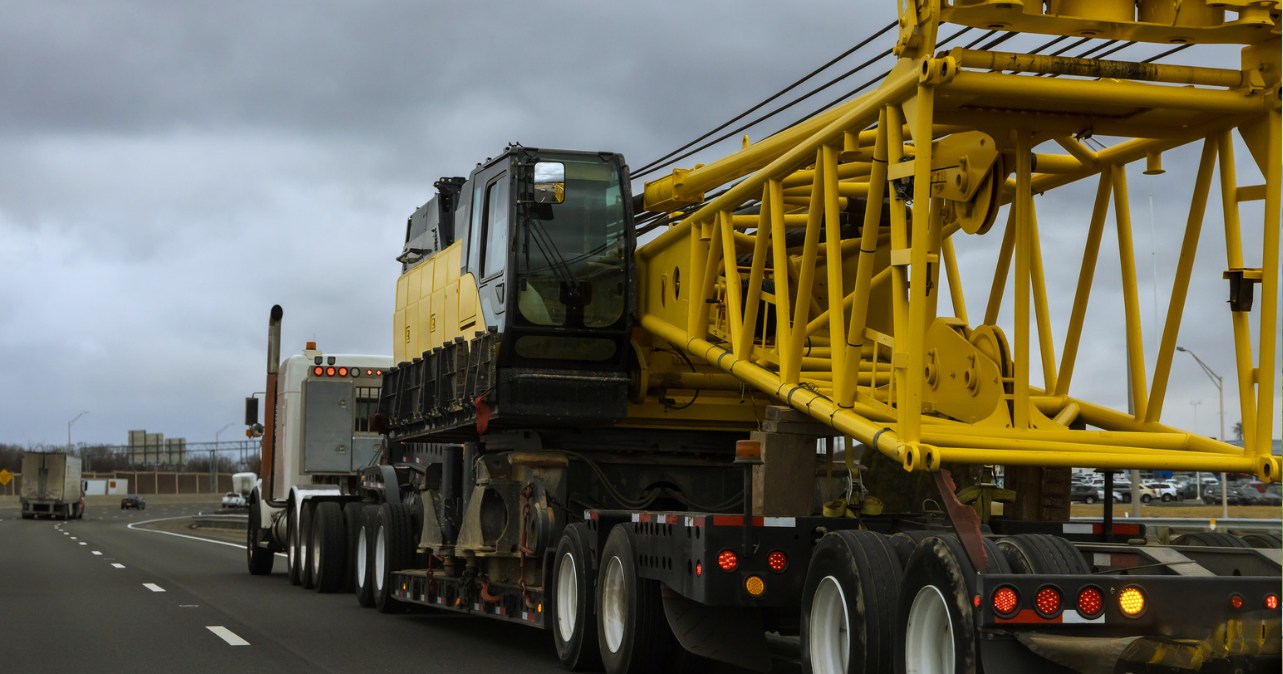
Modern industrial equipment is getting larger. A standard lowboy may not suffice for high-clearance machinery. Specialized heavy hauling in Western Canada often utilizes “double drop” trailers or “removable goosenecks” (RGN) to keep the center of gravity low and clear overpasses.
The SAN-Secure Transport Framework
To manage the high-risk nature of heavy hauling, SAN Forestry utilizes a system known as the SAN-Secure Transport Framework. This protocol is applied to every piece of machinery we move, from bulldozers to power stations.
- Site Assessment (SA): Evaluation of the pick-up and drop-off points, specifically looking for overhead clearances, turning radii, and ground stability.
- Configuration Mapping (CM): Matching the specific machine weight and dimensions to the optimal trailer and axle configuration.
- Route Optimization (RO): Identifying the safest route that avoids restricted bridges or construction zones while complying with provincial permits.
- Load Integrity Verification (LIV): A multi-point check of chains, binders, and securement points before the wheels turn and at scheduled intervals during transit.
Industrial Equipment Logistics: Comparison of Trailer Types
Choosing the wrong trailer can lead to permit denials or, worse, equipment damage. The following table outlines the common configurations used in Western Canadian heavy haul.
| Trailer Type | Common Use Case | Maximum Weight Capacity | Key Advantage |
| Standard Lowboy | General construction equipment | 40,000 – 80,000 lbs | Versatile and widely available. |
| Removable Gooseneck (RGN) | Self-propelled machinery (Excavators) | 150,000+ lbs | Equipment can be driven directly onto the trailer. |
| Step Deck | Over-height loads | 48,000 lbs | Lowers the deck height to clear bridges. |
| Multi-Axle Heavy Hauler | Industrial power stations, large mining drills | 200,000+ lbs | Distributes weight to meet provincial bridge codes. |
Logistics for Remote Forestry Sites
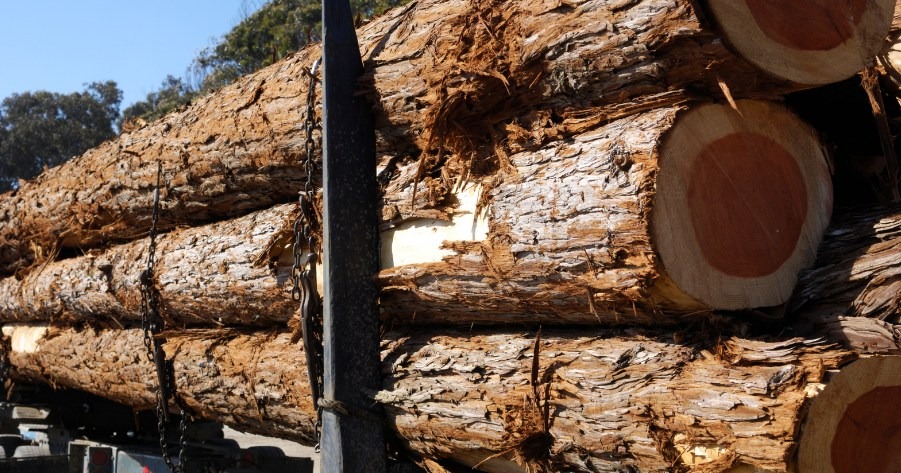
The forestry industry operates in some of the most inaccessible parts of Western Canada. When managing private wood management projects, low bedding becomes the most critical link in the supply chain.
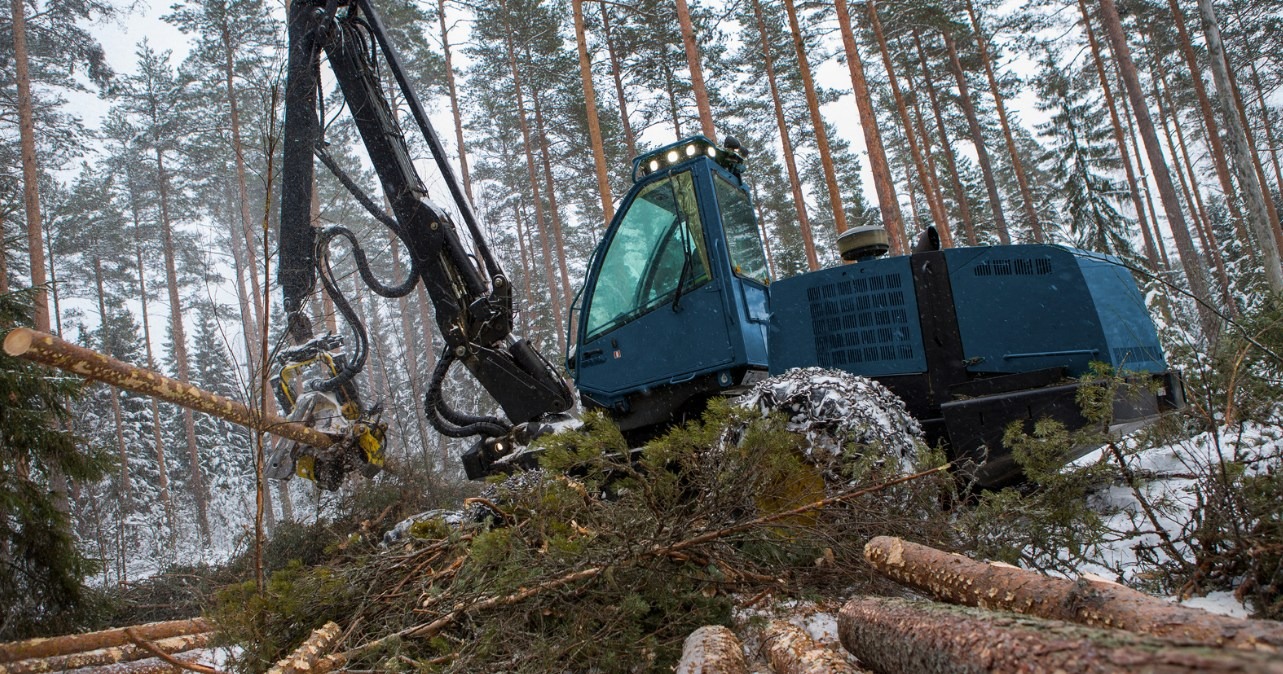
Moving a log loader or buncher requires specialized knowledge of resource roads. These roads are often narrow, one-way, and require radio communication (“calling your kilometres”) to avoid collisions with loaded log trucks. Professional lowbed operators in the forestry sector must be proficient in these communication protocols to ensure site safety.
Checklist: Preparing Your Machinery for Transport
Follow these steps to ensure your equipment is ready for the lowbed:
- Clean the Undercarriage: Excess mud or debris can fall off during transit, creating hazards for other drivers and potentially violating environmental regulations.
- Secure Loose Parts: Any buckets, blades, or attachments should be lowered and secured.
- Verify Dimensions: Measure the final height, width, and length once the machine is in its “travel position.”
- Fuel Levels: Keep fuel levels low to reduce total transport weight, but ensure there is enough to load and unload the machine.
- Check Securement Points: Ensure the “D-rings” or tie-down points on your machinery are in good condition and free of cracks.
Local Considerations for Alberta and BC
In Alberta, the “High Load Corridor” allows for the movement of exceptionally tall equipment, but it requires meticulous planning with utility companies to move overhead wires. In British Columbia, the challenge is often the terrain. Steep grades and tight switchbacks in the Interior mean that trailers must be equipped with specialized braking systems and often require “push trucks” or “pull trucks” in extreme winter conditions.
Winter low bedding safety is a primary concern. Ice roads and frozen muskeg provide a window of opportunity to move equipment into remote areas that are inaccessible in the summer. However, this requires operators who are experienced in cold-weather mechanical maintenance and ice-surface weight ratings.
Need to move heavy equipment in remote locations? Request a consult with our logistics team.
Common Mistakes in Low Bedding
- Inaccurate Weight Reporting: Underestimating the weight of a machine can lead to fines, trailer damage, and safety hazards. Always include the weight of attachments (e.g., a full bucket or an extra set of tires).
- Ignoring Height Restrictions: Western Canada has many low-clearance bridges, especially on secondary highways. Failing to account for the “loaded height” is a leading cause of transport accidents.
- Late Permit Applications: Oversized permits can take several days or even weeks to process, depending on the complexity of the load.
- Poor Communication with the Site: If the site is not ready for the equipment or the ground is too soft for the lowbed to maneuver, you will face expensive “standby” fees.
What To Do If Something Goes Wrong
Even with the best planning, variables like weather or mechanical failure can occur.
- Mechanical Breakdowns: If the tractor or trailer fails, the priority is securing the load on the shoulder or at a safe pull-out.
- Weather Delays: If a mountain pass is closed due to snow or an avalanche, do not pressure the driver to proceed. Safe heavy haul requires patience.
- Permit Issues: If a scale house identifies a permit error, stay on-site. Contact your dispatcher immediately to rectify the paperwork. Never attempt to bypass a weigh scale with an oversized load.
- Load Shift: If the load shifts during transit, the driver must stop immediately. Re-securing a heavy load requires heavy-duty jacks and often a second crane or loader if the shift is significant.
FAQ: Heavy Equipment Transport in Western Canada
What is the difference between a lowboy and a highboy trailer?
A lowboy trailer has a deck that sits very close to the ground, allowing it to carry tall equipment while staying under height limits. A highboy is a flatbed with a deck height above the wheels, which is better for standard-height freight but unsuitable for oversized machinery.
Do I need a pilot car for my equipment move?
In most Western Canadian provinces, a pilot car is required if your load exceeds 3.85 meters (12.6 feet) in width. However, specific requirements vary by highway and time of day, so check your provincial permit for exact details.
How do road bans affect my transport costs?
During road bans, trailers may be restricted to carrying less weight. This often means you need more axles to distribute the load or more trips to move a fleet, which increases the overall cost per machine moved.
Can you move equipment in the winter in remote areas?
Yes, winter is often the best time to move equipment into remote areas with soft ground. However, this requires specialized “winter-ready” logistics and operators experienced in navigating ice roads and extreme cold.
What information do I need to provide for a low bedding quote?
You should provide the machine make and model, accurate dimensions (length, width, height), total weight including attachments, the specific pick-up and drop-off locations, and your preferred timeline.
Is my equipment insured during transit?
Professional heavy haulers carry cargo insurance, but the coverage limits vary. Always verify that the carrier’s insurance policy covers the full replacement value of your specific machinery before the move begins.
Conclusion
Navigating the challenges of low bedding in Western Canada requires a combination of specialized equipment, regulatory knowledge, and regional experience. From the muddy tracks of a spring forestry site to the frozen highways of a northern Alberta winter, the success of your equipment transport depends on meticulous preparation and a commitment to safety. By following frameworks like the SAN-Secure Transport system and staying informed on provincial regulations, you can ensure your machinery remains a productive asset rather than a logistical liability.
Ready to move your heavy machinery with confidence? Contact SAN Forestry today to discuss your low bedding needs in Alberta and across Western Canada. Our experienced team is ready to provide a detailed quote for your next haul.